Stormuring: Meaning, Applications, Benefits & How It Shapes Modern Problem-Solving
Discover the complete guide to stormuring—its meaning, uses, benefits, real-world applications, and how it enhances creativity and decision-making. Includes FAQs, examples, and expert insights.
also read: https://makes1m.com/veneajelu/
Introduction
In recent years, the concept of stormuring has begun capturing attention in both creative and corporate environments. While it may sound like a blend of brainstorming and structuring, stormuring represents something deeper: a refined, strategic approach to idea development. As industries continue to evolve, the demand for innovative thinking grows, and stormuring has emerged as a valuable method to meet those expectations.
In this comprehensive guide, you’ll explore what stormuring is, how it works, its benefits, practical applications, and even how it compares to traditional methods. Whether you’re a business professional, student, researcher, or creative thinker, understanding stormuring can significantly enhance your productivity and decision-making process.
What Is Stormuring?
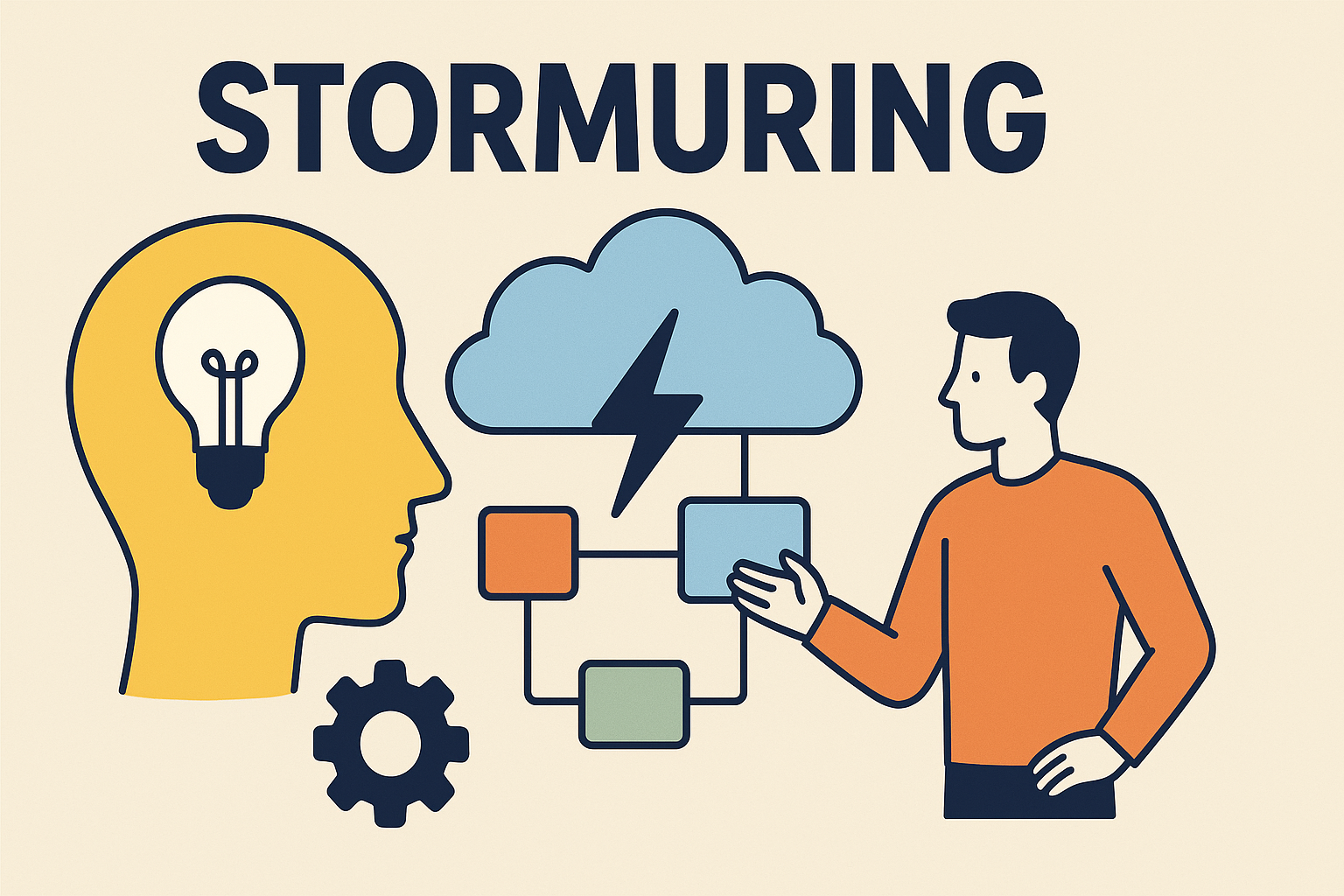
Stormuring is a modern conceptual technique that combines idea generation with intentional structure. Instead of producing random ideas without direction—or overly structuring thoughts too early—stormuring creates a balance between creativity and organization.
It involves three essential elements:
- Creative exploration
- Strategic filtering
- Structured refinement
By merging these components, stormuring eliminates the chaos of regular brainstorming and replaces it with a clearer, more actionable system.
In simpler terms, stormuring encourages free thinking but keeps it aligned with a purpose. This hybrid approach is what makes stormuring so popular in industries that require innovation without compromising efficiency.
Why Stormuring Matters Today
Modern challenges demand fast yet thoughtful solutions. Traditional brainstorming often produces a long list of ideas, but many of them fail to be usable. On the other hand, purely structured processes can limit creativity.
Stormuring offers a solution by:
- Encouraging diverse thoughts
- Preventing mental blocks
- Organizing ideas as they emerge
- Keeping creativity aligned with goals
This technique works especially well in workplaces where teams need to collaborate quickly, remote meetings where clarity is essential, and research environments where focused creativity is required.
How Stormuring Works: Step-by-Step Process
To understand stormuring fully, it’s helpful to break down its process. Though different organizations apply it in different ways, the typical flow includes the following stages.
1. Ideation Without Barriers
The stormuring process starts with open idea generation. Participants are encouraged to share all thoughts freely without self-editing. This mirrors traditional brainstorming but with a subtle difference: even at this early stage, ideas are written in categories or clusters.
2. Clustering and Early Structuring
Rather than waiting until later to group ideas, stormuring integrates clustering immediately. Organizing thoughts early keeps the session from becoming overwhelming.
3. Strategic Evaluation
Each cluster is examined based on relevance, feasibility, and alignment with the main objective. This prevents irrelevant ideas from consuming time.
4. Refinement and Development
Selected ideas are transformed into practical components. Teams expand them with data, logic, examples, or required tasks.
5. Action Mapping
The final step involves creating actionable plans or models. Even creative concepts gain direction, making execution much easier.
Stormuring vs. Brainstorming: What’s the Difference?
The table below showcases the key differences between the two methods:
| Aspect | Stormuring | Brainstorming |
|---|---|---|
| Structure | Balanced and strategic | Loose and free-flowing |
| Focus | High clarity and direction | Broad and miscellaneous |
| Productivity | More efficient | Often time-consuming |
| Idea Quality | More actionable, refined | Varies widely |
| Use Case | Strategy, research, planning, innovation | Creative exploration |
Stormuring doesn’t replace brainstorming—it enhances it by combining creativity with organization.
Real-World Applications of Stormuring
Because stormuring is versatile, many industries use it to strengthen decision-making and problem-solving.
1. Business Strategy and Planning
Companies use stormuring to streamline project planning, product development, and internal improvements. The structure ensures ideas are actionable from day one.
2. Creative Industries
Writers, designers, developers, and artists rely on stormuring when working on complex projects that require originality but also deadlines and structure.
3. Education and Research
Students and scholars use stormuring for thesis development, project outlines, and study planning. It helps eliminate confusion while stimulating critical thinking.
4. Technology and Innovation
Tech teams use stormuring for UI/UX planning, feature development, and system architecture. It prevents confusion and accelerates innovation cycles.
5. Personal Productivity
Individuals use stormuring for goal-setting, habit planning, self-improvement, or even managing daily tasks.
Benefits of Stormuring
Stormuring offers numerous advantages for both individuals and teams:
Enhanced Creativity
Because the process maintains open thinking while offering structure, participants feel more relaxed and imaginative.
Clear Direction
Ideas don’t remain scattered. Stormuring organizes them from the start, improving clarity and confidence.
Faster Problem-Solving
Instead of wasting time filtering chaotic ideas, stormuring helps identify promising concepts sooner.
Better Collaboration
Teams communicate more effectively because thoughts are visually and logically arranged during discussions.
Reduced Overwhelm
Stormuring prevents session fatigue and confusion by keeping the process clean and purposeful.
Common Stormuring Techniques
Different facilitators use different variations of stormuring, but the following methods are widely recognized:
1. Layered Mind Mapping
Ideas are added in layers—main concept, categories, sub-categories, and actionable items.
2. Concept Spiral
A continuous loop of generating, refining, and structuring ideas until the best solution emerges.
3. Anchor Questioning
A primary question guides the entire process, reducing irrelevant thoughts.
4. Filtered Ideation
Ideas are filtered immediately through simple criteria such as feasibility or alignment.
Stormuring Example Scenario
Imagine a company planning a new mobile app. Instead of standard brainstorming, the team uses stormuring.
- They first generate raw ideas—features, designs, user types, problems solved.
- Ideas are grouped instantly into clusters like UX, monetization, technology, and target users.
- Only feasible ideas remain within each cluster.
- The teams refine each cluster into practical plans.
- Finally, an action map outlines the timeline, task responsibilities, and resources needed.
The result: a streamlined, detailed, and actionable plan.
FAQs About Stormuring
1. Is stormuring only for group sessions?
No. Stormuring works beautifully for both individuals and teams.
2. Can stormuring be done digitally?
Yes. Many digital tools support clustering, mind mapping, and structured ideation.
3. How long should a typical stormuring session be?
Most sessions last 30–60 minutes but can be extended for complex projects.
4. Is stormuring suitable for academic research?
Absolutely. Students use stormuring for thesis planning, topic refinement, and study frameworks.
5. Does stormuring require a facilitator?
It helps but is not required. Anyone trained in the method can lead.
6. Can stormuring fix decision-making problems?
Yes. Because it filters and organizes ideas early, it reduces indecision and confusion.
7. Are visual tools required for stormuring?
Not mandatory, but charts and diagrams greatly enhance the process.
8. Is stormuring better than standard brainstorming?
It’s not “better”—it’s more structured and efficient. Brainstorming is ideal for pure creativity; stormuring balances creativity with planning.
9. Does stormuring help with long-term goals?
Yes. It’s excellent for setting and mapping long-term objectives.
10. Can stormuring be applied to personal development?
Definitely. Many people use it for habit-building, planning, and self-reflection.
Conclusion
Stormuring is more than a creative strategy—it is a flexible, organized, and highly effective method for generating and developing ideas. By combining the freedom of brainstorming with the clarity of structured planning, stormuring helps individuals and teams produce actionable, high-quality outcomes. Whether you’re tackling business challenges, creative projects, research tasks, or personal goals, stormuring provides a balanced approach that encourages innovation while maintaining direction.